domingo, 23 de febrero de 2014

What is Asperger Syndrome?

 Fuente: Psyli.com
    Asperger syndrome is a form of autism, which is a lifelong disability that affects how a person makes sense of the world, processes information and relates to other people. This means that you cannot tell that someone has the condition from their outward appearance. This people have some difficulties in three main areas such as: social communication, social interaction and social imagination.

What causes Asperger Syndrome?

    The cause of AS is not known. Currente research points to brain abnormalities in AS. Using advanced brain imaging techniques, scientists have revealed structural and functional differences in specific regions of the brains of children who have AS versus those who de not have the disorder. These differences may be caused by the abnormal migration of embryonic cells during fetal development that affects brain structure and 'wiring' in early childhood and then goes on to affect the neural circuits that control thought and behavior.

    A specific gene for AS has never been identified. Instead, the most recent research indicates that there are most likely a common group of genes whose variations or deletions make an individual vulnerable to developing ASD. This combination of genetic variations or deletions, in combination with yet unidentified environmental insults, probably determines the severity and symptoms for each individual with AS.

Characteristics of Asperger Syndrome.

    The characteristics of AS vary from one person to another but as well as the three main areas of difficulty, people with the condition may have: 

 http://www.intereconomia.com
Love of routines

    To try and make the world less confusing. People with AS may have rules. Children, for example, may insist on always walking the same way to school. In class, they may get upset if there is a sudden change to the timetable.

Special interests

    They may develop an intense, sometimes obsessive, interest in a hobby or collecting. Sometimes these interest are lifelong, in other cases, one interest is replaced by an unconnected interest. For example, a person with AS may focus on learning all there is to know about, trains, cars, planes or computers.

Sensory difficulties.

    These can occur in one or all of the senses. The degree of difficulty varies from one individual to another. For example, bright lights, loud noises, particular food textures... can be a cause of anxiety and pain for people with AS.


    Finally, with the right support and encouragement, people with AS can lead full and independent lives.

miércoles, 5 de febrero de 2014

How to write an Autobiography

 http://todosloscomo.com/wp
    Everybody has a fascinating story to share to the world. Perhaps your experiences will be able to help someone or teach something, so "Why not?" You can do a lot of things, although in my opinion, the best way is an autobiography.

    You probably know what this is already, however I have to explain it. An autobiography is a biography of yourself which is written by you. Ok, but what is a biography? It narrates the most important facts of someone’s life, his or her childhood, adolescence... 

http://arainfo.org/wordpress/wp

    The First Step. When you are writing it you must decide who will be reading the book. A family autobiography requires a different level of writing, although if your life has been extraordinary, you might consider it being published. Most of the famous autobiographies are written by famous or  unknown people. For example: The Diary of the Young  Girl by Anna Frank. She was an unknown person who narrated her experiences which are interesting enough to form a fascinating story.


     The Second Step. Creating a timeline of your life is a good way to make sure you include all the most important events and days. Some advices:
-You don't have to begin with your birth. 
-You can mention some about your ancestry, such as your grandparents' life.
-You should explain something about your adolescence experiences; if you went to school, or something like that.
-Write about your relationship, studies, career, jobs, children, etc.
I you do it, you will help readers get a sense of how you became the person you are.

    The Third Step. You must identify the main characters. Most of them are extremely influential in people's lives, like teachers, boyfriends or girlfriends, mentors, pets, bosses, enemies...
 http://2.bp.blogspot.com

    The Fourth Step. If you like to write your entire life, you should continue an order.
-Your childhood.
-Your puberty.
-Relationships. Your first love, for example.
-What happened between the ages from 30 to 50?

    The Fifth Step. The story has to reach people so you might write in your own voice. You show your personality. Are you funny? Serious? Intense? Or you can write in stages, for example: Your adolescence could be written in funnier way than the period when you started to work because at that moment you were more mature.

    The Sixth Step. I think that it is the most important step because you must be true to yourself through your autobiography. Share all your opinions and ideas, reveal mistakes you have made and times when you've failed other people and yourself.

viernes, 24 de enero de 2014

Some techniques to record a video

http://macaulaylibrary.org
    If you try to record a good video and you don't know how to do it... Don't worry! Here I am writing some techniques; you only have to read it and enjoy it!


Position yourself and your camera. If you are using a tripod, probably it's stable, but if you're not using it, you have to stabilize yourself and your camera as best as you can. How? It's easy, just keep your arms close to your body and breathe steadily. 


Audio. In my opinion, audio is as important as vision, so you should record in a place where there isn't too much wind.


Your shot. Then do a quick metal check: white balance, focus, framing (horizontal and vertical lines, background,...) and iris.


Optical zoom. Don't use digital zoom, please. You should never use it, unless you like grainy or pixilated video.


Keep a extra battery around. Backup battery power is just as important as keeping extra discs or tapes on hand. Some batteries offer longer recording times.


Use both eyes. A valuable skill is the ability to use one eye to look through the viewfinder, and the other eye to watch your surroundings. It takes a while to get used to it, but it means that you can walk around while shooting without tripping over, as well as keeping an eye out for where the action is happening. It's also easier on your eyes during long shoots.


http://www.ronaldvasquez.com/wp


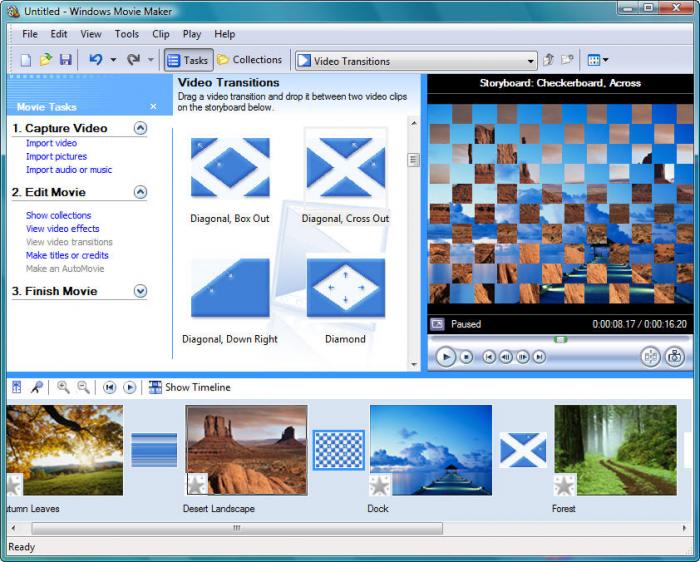
Finally, edit your production. Editing your video shots using what is called a nonlinear editor, such as Windows Movie Maker or iMovie -It depends on you-, is simply the best way to make better video productions. The process is not difficult, but it requires extra time. With a movie editor, you can get rid of poor shots, add smooth transitions, music and titles to make your production worth watching.


I hope this helped you!


viernes, 17 de enero de 2014

Translating Body Language

 http://prettymomguide.com
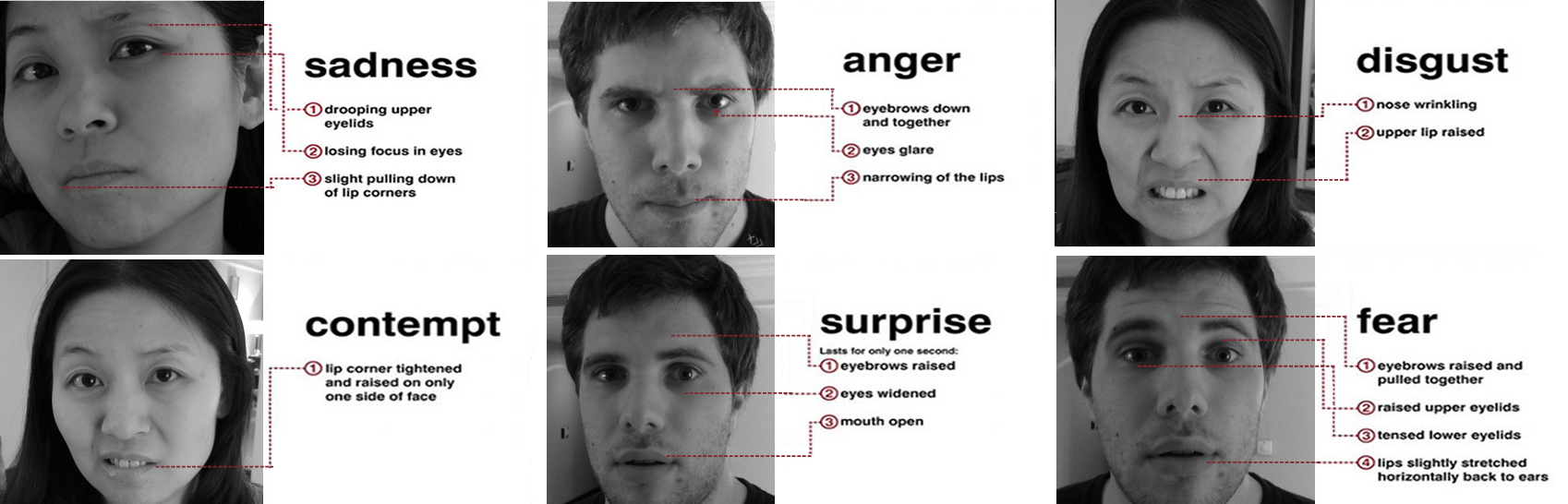
    The gestures, postures and facial expressions by which a person manifests various physical, mental, or emotional states and communicates nonverbally with others.

    Following are some examples of body language, each of this examples communicates a message even without saying a word. 

-Nail biting, it is a type of habit than can demonstrate stress or insecurity.

http://3.bp.blogspot.com
-Arms crossed over the chest. This example of body language can indicate that the individual is being defensive.

-Finger-tapping, it demonstrates that a person is impatient or tired of waiting.

-Hand placed on the cheek. It indicates that a person is lost in thought or is considering something.

-A tilted head demonstrates that you are listening keenly.

-Placing the tips of fingers together. You are a person with authority.

-Touching the nose. It can signify a lot of things, such as: It can be a signal of non-acceptance or that he/she is lying about what he/she is saying.

-Palms open. When someone has an open palm is a sign of openness and honesty, but at the same time it can be a show of submission.

-Pulling to the ear. Sometimes, people pull the lobes of one of their ear when they have to make a decision and they are thinking about it because they are indecisive. It indicates that they cannot come to a conclusion.

    Now, you can be on the lookout for people using body language in your every day interactions and you can know more about the people who are around you.

 http://leadingpersonality.files.wordpress.com


lunes, 13 de enero de 2014

The most common phobia: Fear of Public Speaking

    Public Speaking is speaking to a group of people in a structured, deliberate intended to inform, influence or entertain the listeners. Fear of public speaking is the most common of all phobias, It's a form perfomance anxiety in which a person becomes very concerned that he or she look visibly anxious, maybe even have a panik attack. You can solve the problem...

 http://manuelbellido.com
 Some steps to Successful Public Speaking:

1-Clarify your objective.

2-Analyze your audience.

3-Collect and organize your information.

4-Choose your visual aids.

    You can practice in front of your mirror, for example.

5-Prepare your notes.

    It is advisable to make notes in  the speech, such as an intonation, a gesture that I will do,...

6-Rehearse, rehearse and rehearse.

    Talk out loud and walk around while you practice. Use the same physical energy you plan to use on the day of your presentation. Practice in the car... Why? If you can concentrate while driving, you will be able to pull it from your unconscious when you are in front of the group. Make your points sound off-the-cuff.

 http://www.institutocomunicacionpolitica.com
7- Abstain from caffeine and alcohol before you speak.

    You do not need more jitters. 

8-Always wear your favorite outfit and use attractive colors.

9-Don't be perfect.
    If you're wrong, you don't worry. People are not perfect in real life and give yourself permission to make mistakes.


sábado, 14 de diciembre de 2013

Un curiosa forma de aprender la Tabla de las Derivadas


    Con este vídeo pretendo ayudar a quienes tienen problemas a la hora de aprender la tabla de las derivadas. Espero que con esta propuesta te resulte más fácil, ameno e incluso divertido sentarte a hacer los problemas.


Enlace figuras:

domingo, 8 de diciembre de 2013

Visibilidad y Accesibilidad

     El miércoles día 4 de diciembre, he asistido a un seminario sobre la Visibilidad y Accesibilidad, es decir, la vía para la normalización de la discapacidad.  Este seminario no ha tratado sobre las dificultades que encuentra una persona con discapacidad motriz, por ejemplo,  a la hora de desplazarse por la ciudad. En esta ocasión han ido mas allá, ¿cómo se pude llegar a sentir alguien de dichas características en nuestra sociedad? En ella, Jaime Camacho Sánchez, consultor audiovisual y Juan Antonio Ledesma, periodista, nos han estado explicando como se trata a los discapacitados en los medios de comunicación. 

    La mayoria de los anuncios, titulares y artículos se equivocan continuamente. Solo se fijan en como recibirá la noticia una parte de la sociedad, pero... ¿Qué pasa con el resto?.

 http://www.aspace.org
    Las personas con discapacidad no están excluidas, también están ahí y forman parte de la sociedad, aunque se vean continuamente marcados por clichés y prejuicios, potenciados por el mal uso de la publicidad y de la información. Destaco principalmente el uso inapropiado de la prensa escrita. Por ello el Comité Español de Representantes de personas con Discapacidad (CERMI) actúa para que no se digan cosas como estas en un titular: "Tubo un accidente y el pobre se quedó inválido" o "No levantará cabeza, como está en una silla de ruedas". 

    ¿Alguien se ha parado a pensar en como se sienten quienes están en esa situación?, ¿Y sus familiares?. Hay que cambiar la forma de ver las cosas, es cierto que es muy duro el padecer una minusvalía pero no es el fin del mundo; y por lo tanto hay que facilitar el día a día a quienes la padecen y no solo eso; en vez de menospreciarlos, deberíamos tomarlos como ejemplo de superación personal porque... ¿Quién ha dicho que la vida es fácil?  La vida es un camino repleto de obstáculos que queramos o no tenemos que hacer. ¿Por qué en vez de ayudarlos nos dedicamos a echar más piedras sobre su camino? Es hora de que se produzca un cambio de trescientos sesenta grados, es el momento de que despertemos y que nos demos cuenta de lo increíbles que pueden llegar a ser. Puedes lamentarte toda tu vida o salir ahí fuera y hacer tus sueños realidad.

 http://semanal.cermi.es
    La plataforma CERMI, que representa a más de 3.8 millones de hombres y mujeres, más familias;  pretende la apertura a la sociedad de este segmento de la población, trasladando una imagen ajustada, que evite estereotipos; así estimulando la toma de conciencia y la percepción social respecto de estas personas. Es muy importante que quienes pertenecen a este sector conozcan sus derechos y que sean reconocidos plenamente, para así alcanzar la plena ciudadanía en igualdad de estos y de oportunidades con el resto de componentes de la sociedad.
    Aquí dejo el enlace con algunos vídeos de empresas que han entendido el mensaje: